SPATIAL BASS ARCHITECTURE
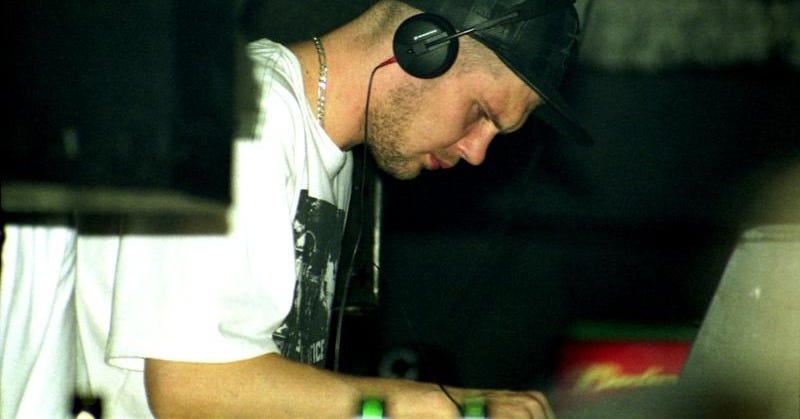
Dancehalls are rooms with at least two key components within them: bodies and loudspeakers, and not many producers show as much understanding of this as Loefah.
What is happening to your body when you listen to one of these spatial masterpieces? For one thing, it is not contracting; it expands. The division of frequency ranges: the low sub bass sitting where it is, perfectly placed in “the mix”, is also referring to its placement in time and space itself, which is the canvas for a Loefah track like “Mud”.
The sound system is a time machine. It brings people closer to the source of time itself. To get there, we need to move three aspects of our individual meat capsules when in a nightclub.
Enter the head nodders. Those who represent another level to the source of the sound itself, and so are also included within the signal flow, from the foot’s sole to the buttocks, to head space, to beyond. Drugs also come in handy.
Control over these three levels is a Loefah production. These clear functional arms focus directly on three pillars of the human body.
I have honestly been waiting as patiently as one of Loefah’s epic bass drops for writers around that scene to sit their academic asses down and write a treatise on this sound system samurai. I don’t plan to do it, but I do feel compelled to share the work of musicians who have left a lasting mark (without actual personal injury) on myself and undoubtedly on sound system culture itself.
Even if I am of a slightly older generation, the story of how people figure out how to be heard clearly and loudly, even with instrumental music, is a story of humankind as a whole. If anything, the releases of AI music ‘push a button and make a beat’ systems show that we can all do better to provide (human) insight into the humans who made executive choices and took risks to set the standards. Those standards are not limits, but symbolize what sound system music can be, the thing these models are trained on, without acknowledging the people themselves who came before and helped with its sonic architecture.
Space between the head and the dance will return in the future within the artificial acoustic space that AI is built in, and will be the bridge that crosses back into our reality’s time frame. This is why it is important to go beyond standard music theory, and to listen to music like this from the standpoint of the time we are in, were in, and are going to be in.
Time, timing, rhythm, pulse, vibration. We are now approached with the non-vibrational, and need to know where it is. Careful: if you look for it in there, you may find no way out and still be unable to find any vibration in the latent space of the AI purgatory.
I am not going to relate Loefah to a genre. I want to speak only on what is being communicated through the sound system. Let’s think about what it means to slow down when everyone wants to go fast, and what it means to let an intro last a bit longer than deemed sane. These are human art-ifacts. Some use sound, musical standards that are not contradicted, like notes, tempos and time signatures (yawn), but within that space is another, where a gladiator can either try fighting a lion (the sound system) as if they know exactly what the animal is thinking, and run straight in a line, because they have no concept of using the area around them to at the very least buy their time by a few minutes. They must open up to the battlefield (the room’s acoustics) and use its space. With that advantage, they can move around with room to wave their sword, feeling out the space, just as a bassline or a snare reverb should.
Modern dub-driven sound system music subcultures, Phonk, Trap, and modern film scoring as well, are all influenced by more than “electronic sounds”. The core sounds of the drum machines (kick, rimshot, snare, clap, hi-hats, toms) have been front and center since the electro funk sound that shaped what we hear today, and they are still the same sounds used in most bass music genres. At this point, it is fair to say that the toolkits that came with the TR drum machines are here to stay, like piano, bass, drums, and horns are always within Jazz.
Hip-Hop started as a dance music genre stemming from B-Boy culture, continuing from where Disco left off, but the dance and the music part eventually split off, and it is something that calls for further investigation. Fast forward, Dubstep came around, which did not have that additional pressure. The dance had been compressed to a head nod, brought on by the 1990s and what was then defined as “Hip-Hop”.
And what Dubstep did was initially help carve out a benchmark for sound systems to mark their own territory, like a tuning fork, which wasn’t entirely appreciated by those outside of those sonic and symbolic groupings, “the Other.” In 2004, sub bass was in the process of being utilized for psychological and cultural warfare and was in ongoing development; I liked to call it the MK-Ultra-Sound-System Operation.
Loefah got it right, though: focused on careful divisions of frequency groupings and space to create an Other-body/mind dance floor where race, color, gender and geography vanish.
At times, people judge these productions almost as they would a painting, without checking the changing of time within the piece. Loefah decides how long to wait until the bass drops. But here is the hard part most do not get right: when it happens, it really happens.
This is the perfectionist part of Loefah, and that aspect works. The wait he gives to the low-end “main course” is defiant of the market and the audience screaming out for the drop (this could get out of hand at some of those events).
The audience needed that bass, so why wait? Because it is not the audience’s choice. Loefah will give you the bass when Loefah feels it is time to do so, but the difference between him and others who do this is that Loefah knows exactly what time to drop it, and he is right, but one could count it out, try the same, and it will not have the same effect; there is more to it than that. It has to do with what came before it, the atmosphere built up to it, all to do with time, patience, work, diligence, attention, pain, suffering, continuing, resistance, persistence, and lastly, the expectations the audience has of the person controlling the sound system to deliver that final blow.
When Loefah’s tracks interlock with the other elements like an ouroboros, you’ll see a well-standing individual slowly morph into a ghoul of their own making, contorting their face, possessed by a future liquid self, transformed by the absolute nastiness of the bass line surgically penetrating every cavity in just the right place at just the right time.
So let’s talk about the bass. This is not very complex, elaborate, or hard to play in terms of notes, but it is individual, and that is relevant. What makes sub bass recognizable is in the deeper tunings a producer chooses, and if they resonate with rooms more often than not, and also on headphones, you’ve got a winner.
Loefah has an ear not only for sound systems, but for the club’s acoustical spaces. The magic is what it brings out between the sounds, the reflections, and an attention to each sound as a character that needs its own space to speak and act in its auditory Horror Show. The space in the productions provides a platform for all of this mayhem to go down, and that is a science.
The sound system is the transmitter of long and short waves; the acoustics of the dancehall push the length of those, and the people in the room change that simply by being there, so the job is not easy or one way, no matter how much some may say so. Bring it back to where we started: bodies and loudspeakers, and everything Loefah does with frequency, space, and precise patience is in service of what happens between those two things.